Empowered Adaptation
By Sarah Holden
The most recent flood and landslide events have once again highlighted our vulnerability as a country, and what’s at stake. It’s easy to point fingers and single out one thing that needs to change, but the reality is more complex. The solutions are many, and they run right through the full value chain of emergency management: risk management, readiness, response and recovery.
They include improving our understanding of different types of natural hazard risk; agreeing a clear risk and responsibility pathway between government, the financial services sector and individuals, so we know where the boundaries of financial burden sit; passing improved risk knowledge on to councils, planners, developers and communities; proactively confronting where physical retreat needs to happen and developing a staged roadmap that is fair and equitable; helping communities train and equip themselves to be more resilient; investing in the long-term resilience of our infrastructure systems; and continuing to invest in our emergency services and first responders. The list goes on.
Over the past 25 years, I’ve worked on climate change across insurance, banking and, more recently, consulting with many different industries. From this work, I know the weather-related emergency events we are experiencing are not going away. They will keep coming, likely with greater frequency, and certainly with greater ferocity. More rain, stronger winds, happening more often.
In my spare time, I also work in frontline emergency management. From this, I’ve learned that the greatest determinant of how well communities cope with these events is not what happens at a national or even regional level, but what happens locally. When a severe weather event hits, there is only so much that can be done from afar. At the heart of resilience is people’s ability to look after one another.
Local emergency resilience groups play a critical role here: educating communities about the specific risks they face, helping households prepare, and coordinating appropriate local responses during an emergency. Through the emergency resilience work I’ve been involved in within my own community, over the past year we’ve equipped our local hall to operate as an emergency hub if homes are flooded, exposed to a slip, or left without power.
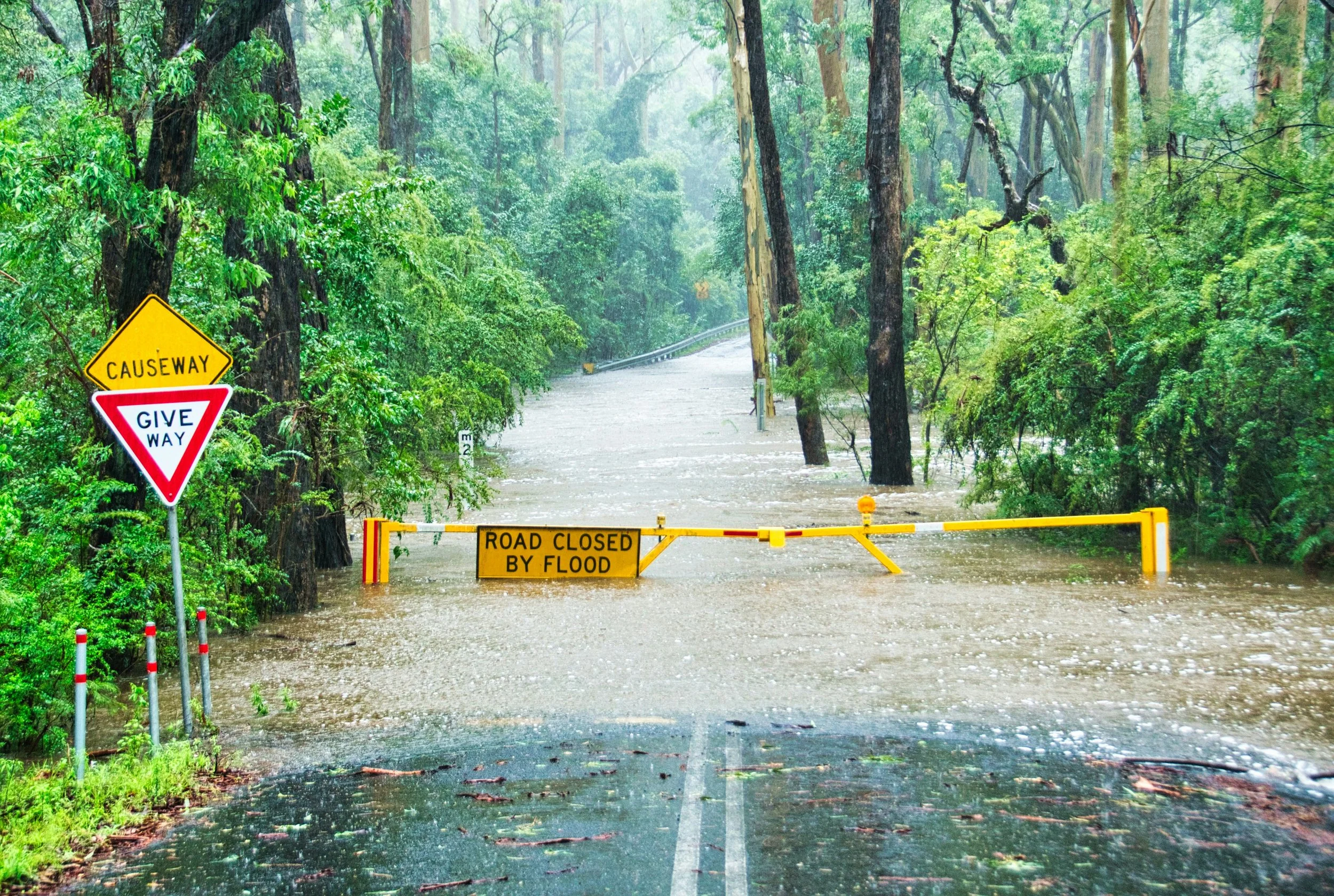
This doesn’t detract from the role of emergency services, first responders or regional Civil Defence Centres, which provide comprehensive accommodation and support. It recognises a simple reality: they might not be able to reach us and we may not be able to reach them. The community where I live has only one road in and one road out, and that road was blocked during the 2023 Auckland floods. We’ve trained local volunteers who can be activated to stand up the hub if needed, all done under our own steam, with support from Auckland Emergency Management (AEM).
AEM has provided excellent emergency readiness information and hub resources, which we’ve adapted for our local context. Our emergency resilience group includes representatives from neighbourhood support, the residents’ association, a community trust, schools, businesses, and two of us from Fire and Emergency. AEM stays across what we’re doing and supports us where needed.
Over the past five years, our community has run emergency expos, prepared a localised emergency resilience guide, delivered first aid training, established the hall as an emergency hub, recruited and trained volunteers to run it and run an weather-event scenario. This has all been driven by goodwill and passion. None of us are professionals in this space, we’re all just regular folks doing our best for our people.
Like many communities across Aotearoa, we’ve relied on a patchwork of community grants and local board funding to resource essentials such as a generator, hub equipment, and subsidised first aid training. This experience is not unique. Across the country, there are countless community-led resilience groups, iwi, businesses and charities quietly stepping up to support their people when it matters most.
The Government’s Strengthening Emergency Management Roadmap 2026–31, launched last year in response to the Inquiry into the 2023 North Island Severe Weather Events, seeks to transform the emergency management system so it can manage major and severe emergencies. A core focus is giving effect to a “whole of society” approach.
Two of the seven key initiatives focus on enabling greater self-sufficiency at the community level, with the stated outcome that individuals, businesses, communities and iwi/Māori are equipped, organised, funded and supported to prepare, respond and recover.
I absolutely agree with this direction. No one understands local risk better than local people: where slips are likely to occur, who is most vulnerable, and what resources can be mobilised quickly. But if we genuinely want communities to step up confidently, we must better equip them with skills and capability, reduce the potential legal and liability risks that can come with helping others, and make funding and resourcing far more accessible.
We may be fairly powerless to stop the increasing frequency of severe weather events, and I say this with some bitterness. Twenty-five years ago, it felt like we still had a chance to significantly reduce the worst impacts if everyone got on board with cutting global emissions. While decarbonisation remains critical, the science is clear: even at current emissions levels, things will continue to worsen due to the lag between emissions and warming. Much of today’s climate impact reflects emissions from 10–40 years ago.
So yes, we must keep pushing towards a lower-carbon future for the sake of our children. But we must also urgently empower ourselves to adapt.
The good news is that adaptation isn’t something that we have to wait to be “done” for us. There is far more that each of us can do - before, during and after emergencies - to better manage risk.
I grew up in a time when weather-related emergencies were relatively rare, perhaps one every few years. Preparation in our household amounted to a box of candles in case the power went out. No evacuation plan. No grab bag. No awareness of emergency shelters. Back then, that level of preparation would have felt like overkill. Today, it feels inadequate.
This cultural legacy means our adaptation and preparedness bar is very low. Yet we now face a future where extreme events are becoming routine. We need to lift that bar, collectively and deliberately.
We all have a part to play. Some practical starting points:
At a national level: Have your say on the Emergency Management Bill, which will replace the Civil Defence Emergency Management Act 2002. Submissions close at 11.59pm on Sunday, 15 February 2026.
At a regional level: Understand the risks where you live. Start with the Get Ready website, then explore your regional CDEM’s localised information, including flood maps and response guidance.
In your community: Find out what emergency resilience groups already exist, or where gaps remain. Every skill is valuable. Neighbourhood Support or your regional CDEM is a good place to start to identify what is happening in your community.
At a household level: Prepare a grab bag, think about what you’d need if utilities were disrupted, and include pets. When buying property, consider long-term climate resilience and insurability, not just today’s conditions.
For businesses: Consider how you can support resilience locally and influence policy nationally. This is especially relevant for sectors such as planning, development, construction, banking, insurance, health, and emergency services, but no business is exempt from climate risk. Apart from the Emergency Management Bill noted above, the Government will be consulting on policy to support its Adaptation Framework later this year.
While individual and community action matters, in the longer term we also need bipartisan agreement on an adaptation roadmap for our country. The recent announcement that Labour and National are working together on modern slavery legislation shows that cross-party cooperation is possible when the stakes are high enough.
Climate adaptation is one of those moments.
If we want a more resilient Aotearoa, we need to stop treating emergencies as isolated shocks and start treating preparedness as a shared responsibility. Empowered adaptation isn’t optional anymore, it’s the price of protecting our people, our communities and our future.